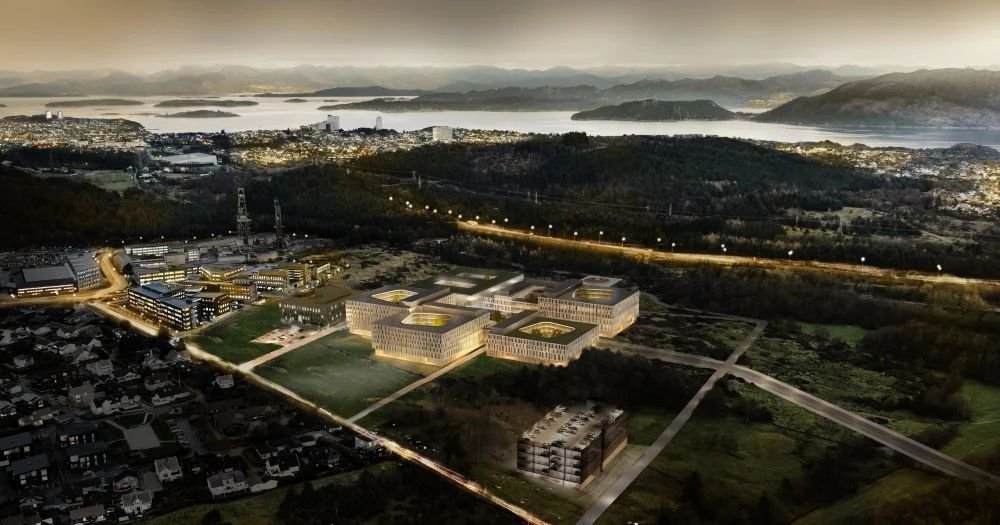
The ambitious hospital project in the Stavanger region of Norway is a textbook example of advanced planning and execution methods in construction. With around 100,000 square metres of area and a target completion in 2024, the project faces a wide spread of challenges. To handle them effectively, an innovative planning method based on lean principles was introduced. Bringing lean methodology into the planning of the major hospital project in Norway was not just a paradigm shift — it earned international recognition. The project was awarded the world’s best digital construction project. The recognition came from the American IT giant Autodesk during the construction industry’s largest digitalisation conference globally.
The hospital project must meet several critical requirements simultaneously. These include a tight schedule, the complexity of construction activities and the coordination of a large number of stakeholders and subcontractors. Given a build period of just five years and more than 22,000 individual activities running in parallel, the time available for planning and execution is limited.
Traditional project planning methods, often built on long-cycle planning of several weeks or months, were not flexible enough for the dynamics of the project. A lean-based planning system was therefore introduced, using adaptive, short-cycle planning intervals of one week.
This approach allows precise, adjustable planning that continuously adapts to changing conditions and unforeseen challenges. The short intervals enable timely review and adjustment, which minimises bottlenecks and delays.
A further step in optimising the planning processes was the introduction of a unified planning tool tailored to the project’s needs. The tool allows every task and activity to be visualised as “trains” and “wagons”, which makes coordination significantly easier. With one shared tool every participant “speaks” the same “language”, which lifts the efficiency of the entire project.
Conclusion
Bringing lean methodology into the planning of this large hospital project in Norway has produced a significant optimisation of construction processes. By combining short-cycle planning intervals with a unified planning tool, a flexible and robust project structure was created — one that can meet a diverse and complex set of challenges.
The approach demonstrates that the rigorous use of lean principles, the adaptation of best practices from other industries and the use of digital tools can produce outstanding results in traditional industries such as construction.