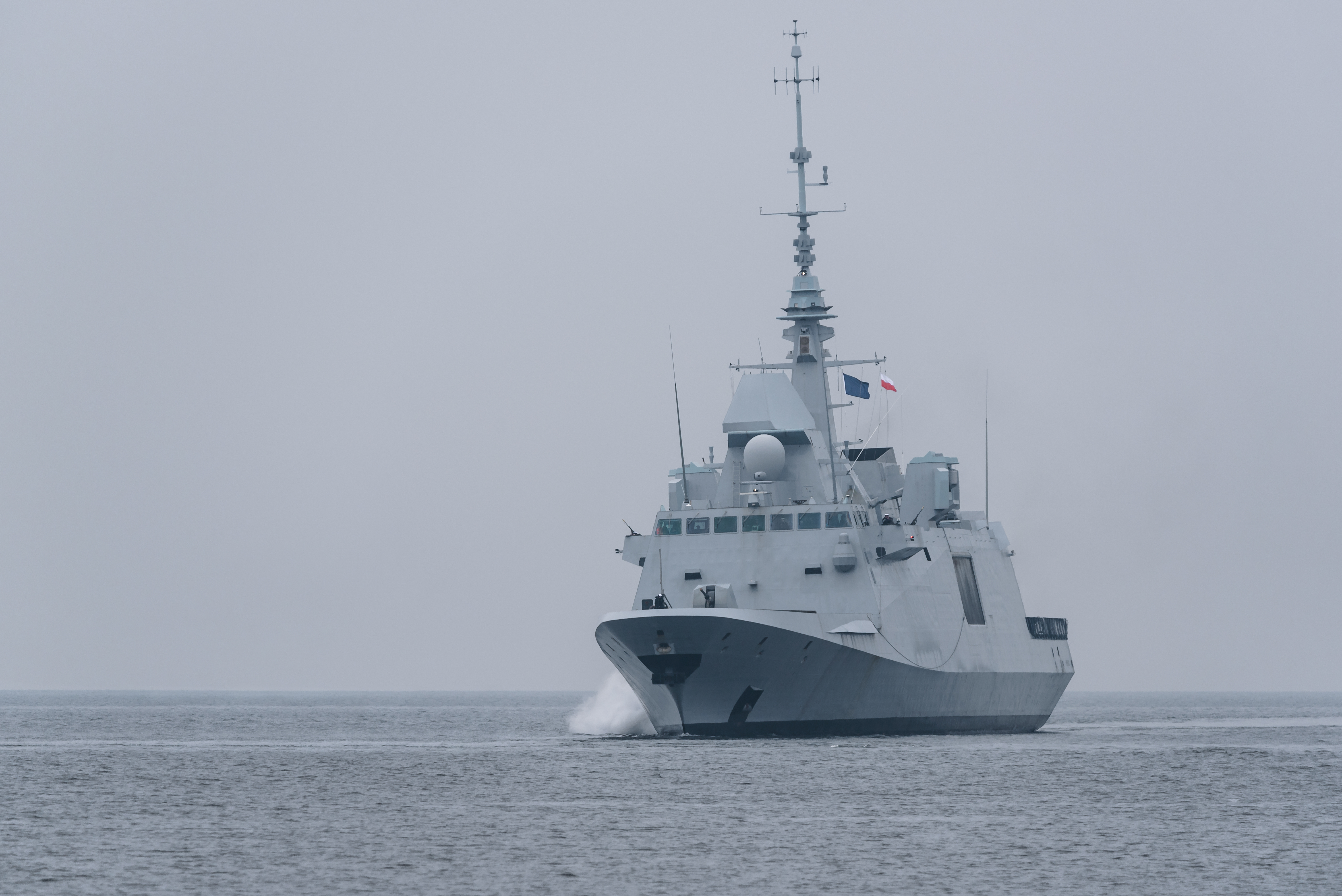
Western navies are arming up at a rate not seen in decades. Yard order books are full out to 2031 and beyond. At the same time, frigate programmes are regularly running two to four years late, often with substantial cost overruns. Across every western navy, from Italy through France and Germany to the United Kingdom.
The problem is rarely the yard itself. It sits in the interplay of first-of-class risks, scarce specialist engineering capacity and supplier bottlenecks, sharpened further by today’s geopolitical pressure. Anyone who wants to win delivery capability back has to address these constraints simultaneously.
What delays frigate programmes
First-of-class risks are the rule
A frigate is more than a platform build. It is an integration project for propulsion, weapons, sensors, communications and protection systems at a density not seen in civil shipbuilding. Every new class carries its own technical hurdles; every unit has first-of-class aspects, because sensors or weapon systems are added through the build. If you do not model these risks up front, schedule reliability is lost in the first year after keel laying.
Engineering capacity is globally limited
The number of engineers who can design a frigate in detail is finite. Security clearances tighten the bottleneck further, because personnel moves run slowly. If engineering capacity is not orchestrated across yard and consortium boundaries, you build sequentially where you should build in parallel — and the programme slips structurally.
Supplier bottlenecks tip the chain
In a frigate programme, slipway, specialist trade, sensor integration and trials hang together like links in a chain. A single bottleneck at one subcontractor — for sonar systems or turret hydraulics, for example — can block a yard for months. Operational steering has to reach beyond the yard boundary into the supplier network, otherwise the whole system slows together.
Where delivery capability can be regained
The levers are operational, not technological.
Model ramp-ups in advance. Experience from platform builds does not replace modelling for the specific class. If you do not work the bottleneck through up front and build it into the steering rhythm, you lose schedule reliability in the first quarter after contract start.
Make supply chains visible early. Bottlenecks at specialist trades often show up months before they bite. The question is whether they are on the yard’s agenda before they become tangible, or only after.
Daily steering instead of quarterly reports. A robust operational routine, in which deviations show up early and decisions get taken, holds schedule reliability stable over an eight-year build. If you only steer through the weekly report, you steer too late.
The yard operating model decides delivery, not the ship technology.
Who has done this already
Lean Maritime has worked in exactly this complexity since 2010. Yards, owners, port terminals, offshore structures, suppliers. Spun out of Porsche Consulting, the firm transfers the logic of industrial serial production to maritime major projects: takt planning, modular pre-assembly, capacity steering across yards and sites.
In the current rearmament phase, operations decides which navy gets its frigates on time and which does not.
Lean Maritime is part of the Lean Group network. More at lean-maritime.com.