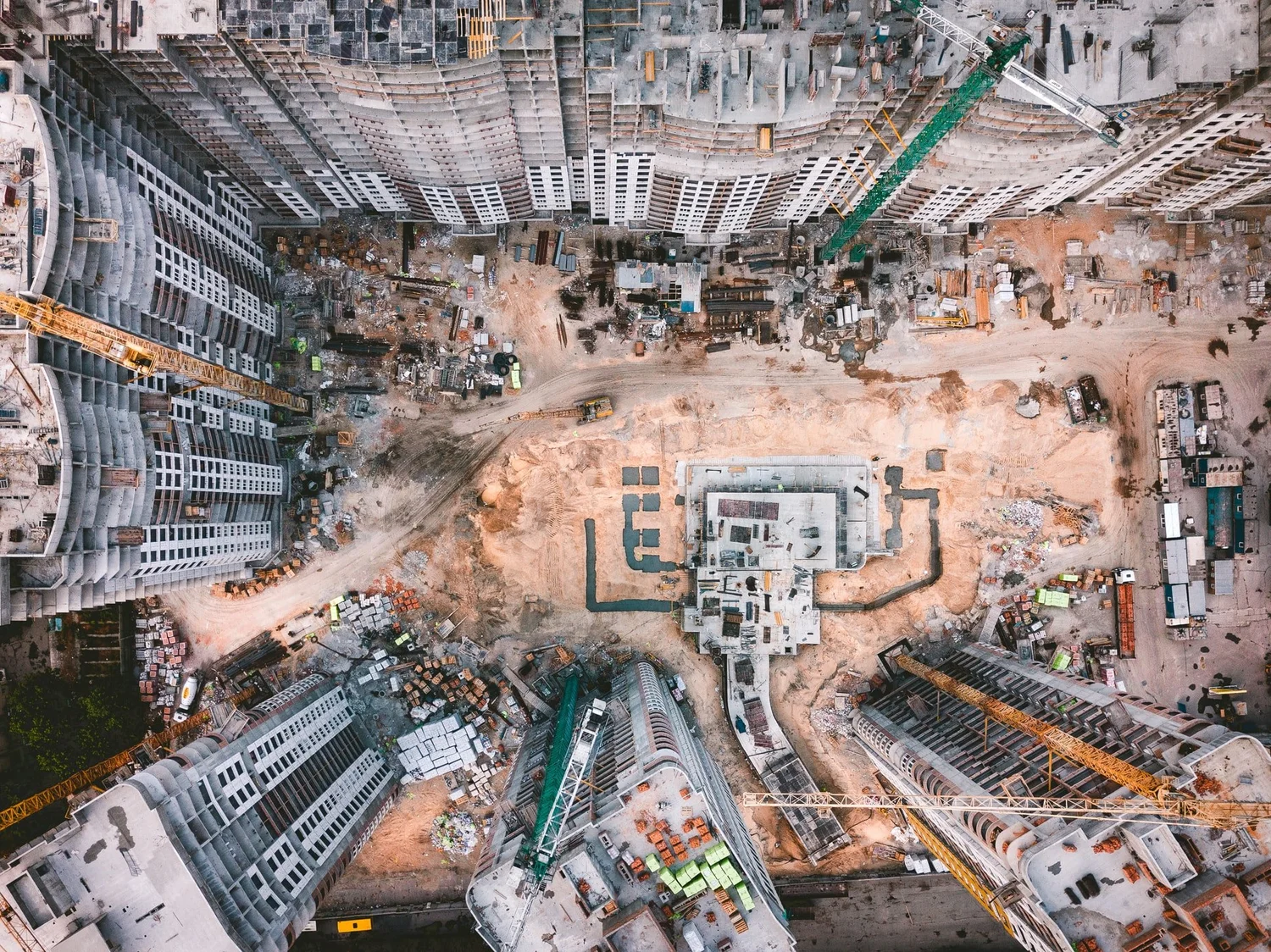
“Producing first results in a lean-construction pilot project is fairly easy,” says Theo Herzog. The harder question is how to make it stick. The online portal “Der Prozessmanager” interviewed Theo Herzog about the opportunities and challenges of lean approaches in the construction industry.
On www.der-prozessmanager.de, the editorial team curates specific knowledge around efficiency and waste reduction for process designers. Their goal is to provide “utility-driven information, templates and tools” on “process management, lean administration and organisational development”, and to support process owners in the German-speaking world “in their daily work” through editorial content.
In the interview “Lean Construction — Industry 4.0 in single-piece manufacturing”, Theo Herzog, managing director of Lean Maritime GmbH, explains what lean management means for construction companies in project industries.
Interview with Theo Herzog in DER PROZESSMANAGER Lean construction management in practice in capital-intensive major projects
Lean Group is specialised in operational efficiency in capital-intensive projects. With the Lean Maritime consulting brand the company focuses in particular on the challenges of construction, offshore and shipping. In the conversation with DER PROZESSMANAGER, managing director Theo Herzog explains why classical approaches often fall short in these industries — and how lean methods improve project delivery in measurable terms.
DER PROZESSMANAGER: Lean Maritime is a management consultancy focused on heavy industries and capital-intensive projects. The consultancy works in shipbuilding and ship operations as well as offshore and construction. Why did you focus on these areas?
Theo Herzog: Our focus is on the delivery of complex major projects. Unlike serial production, these are one-of-a-kind — every project is different. Exactly there sits the particular challenge: to achieve a structured flow in design and construction, project structures have to be set up according to lean principles and managed systematically. The know-how of every project participant is decisive for that.
DER PROZESSMANAGER: Your management consultancy uses lean methods. That includes lean management in the construction industry — so-called lean construction management. What exactly is lean construction? Is the method suitable for every construction project?
Theo Herzog: Lean construction describes a way of thinking and acting for structured project delivery. It moves away from classical approaches — such as purely segment-by-segment delivery through subcontractors with minimal own steering — towards short-cycle, controllable structures with high transparency. In principle, lean construction is suitable for every construction project, but the methodology always has to be adapted to the specific situation.
DER PROZESSMANAGER: What opportunities and risks does lean construction management bring?
Theo Herzog: The biggest advantage lies in building a systematic production system that integrates every relevant optimisation method. Such a system can be learned, trained and reliably reapplied. The important thing is not to over-complicate the topic with theory. In the end it is about one goal: completing a project on time and to high quality — and economically successfully for the executing company.
DER PROZESSMANAGER: Developing and embedding lean methods in organisations is often difficult. What challenges do you face most when introducing lean construction management?
Theo Herzog: The biggest challenge is anchoring it in the organisation for the long term. In a pilot project, results can usually be demonstrated quickly. But the transformation into a high-performance, quality-oriented and schedule-binding company culture demands consistency and stamina — at every level.
DER PROZESSMANAGER: Your consulting focus is “operational efficiency in one-off, large and complex projects”. What was your most exciting or most difficult project?
Theo Herzog: The construction of a hydroelectric power plant in the Amazon, with a project volume in the billions of euros — that was both the most demanding and the most instructive project of my career so far.