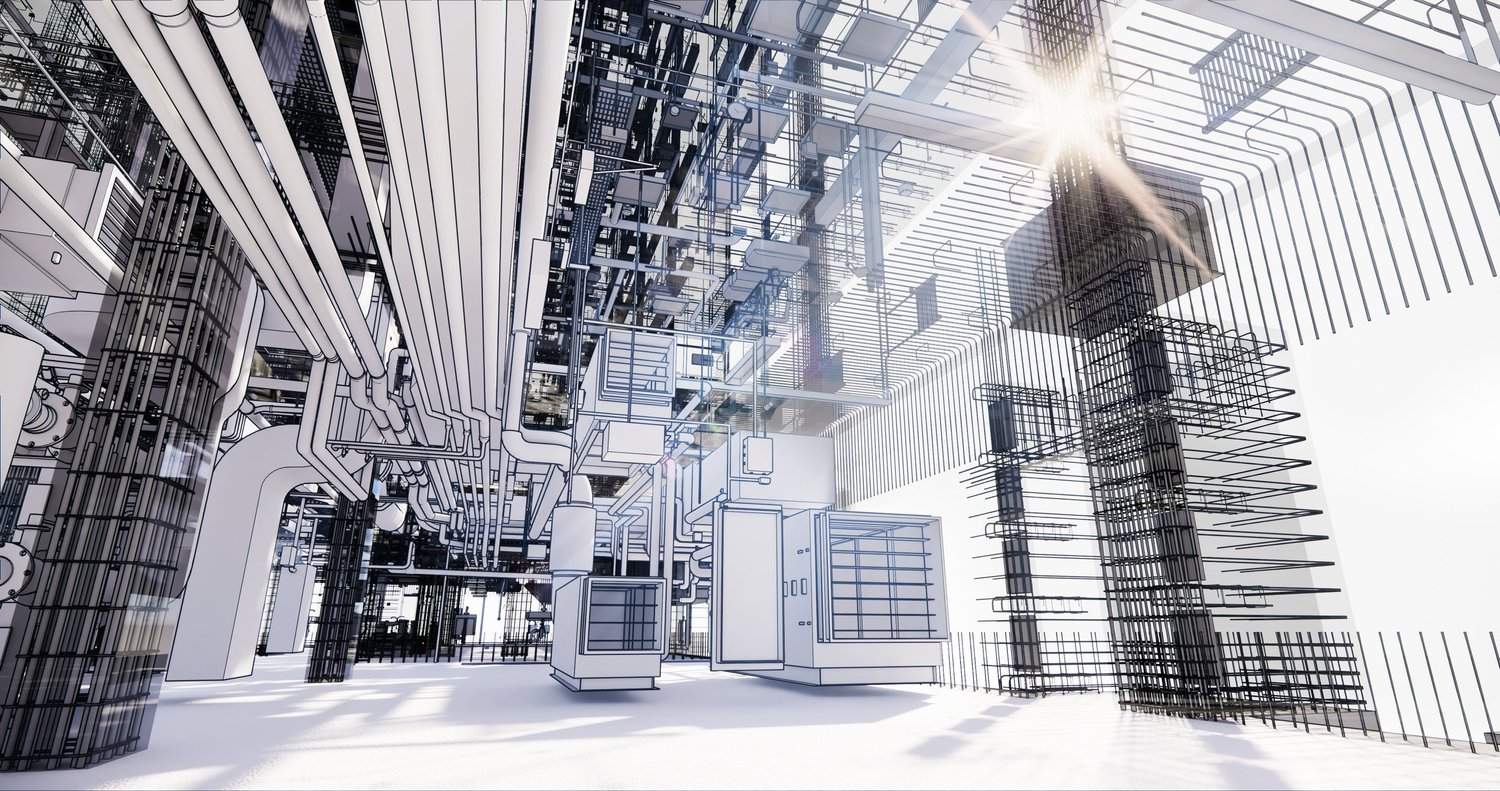
Construction planning has gone through a remarkable transformation through the integration of digital tools and lean principles. Building Information Modeling (BIM) and Lean Construction in particular have the potential to lift the efficiency and quality of construction projects considerably. In this article we lay out these approaches in detail and explain their synergies through a project example: planning an industrial building. We close with a brief look at other modern approaches.
BIM is a digital representation of the physical and functional characteristics of a building. It enables precise, collaborative planning and execution. One of BIM’s key advantages is that it lets you embed lean principles such as taktung in planning and execution — a structured, granular approach that prevents delays. Through takt planning and the synchronisation of all project participants — architects, engineers, owners and subcontractors — coordination improves dramatically. The digital model serves both planning and execution, continuously updated and adjusted to real conditions. BIM also makes change management easier, because every change is documented and made immediately visible.
The project example is the planning and construction of a new industrial building. The full delivery was steered through a specifically configured process map. The project starts with a comprehensive analysis in which the requirements of the owner and users are gathered. With BIM a digital model of the industrial building is built that takes every aspect into account. This enables collaborative planning, in which all participants can give early feedback. The needs analysis is complemented by a detailed survey of the construction site. That data goes directly into the BIM model, which makes precise planning possible.
In the planning phase we use lean principles to optimise the value stream and ensure that every step contributes to value creation. The BIM model is used to visualise takt planning, in which the entire build phase is divided into short, mutually aligned segments. This taktung enables precise coordination of construction work and minimises waiting times and bottlenecks.
A core component of this phase is the synchronisation of all project participants. Through regular meetings integrated into the BIM model — so-called “BIM collaboration sessions” — every participant is kept continuously up to date. Changes and adjustments can be incorporated and visualised immediately in the digital model, which speeds up decision-making and improves transparency.
During execution the BIM model is continuously updated to reflect changes and adjustments. Lean methods such as flow and pull ensure that materials and resources are available just-in-time. That means deliveries and construction work are precisely synchronised, in order to minimise storage time and optimise material flow. A practical example of these methods are the concrete works and the entire interior fit-out. Takt planning specifies exactly when and where which materials are needed. The detailed planning in the BIM model shows which areas are ready at which point in time, so that the coordination of deliveries and execution mesh seamlessly.
Continuous improvement and feedback throughout the project ensure that the industrial building meets the highest standards and matches user expectations. Once the building is finished, a comprehensive review takes place, in which any defects are spotted and addressed straight away. Through detailed documentation in the BIM model the entire process is transparent and traceable, which makes quality assurance significantly easier.
Integrating digital tools and lean principles into construction planning brings substantial benefits. They enable more efficient planning, reduce costs and improve the quality of construction projects. The example of the industrial-building plan shows how these modern approaches can be applied in practice. Beyond BIM and Lean Construction, there are further modern approaches that can help optimise the construction process. Many innovative approaches are still in their early days and promise an exciting future for an industry that is continually looking for new ways to make projects more efficient and more sustainable.